
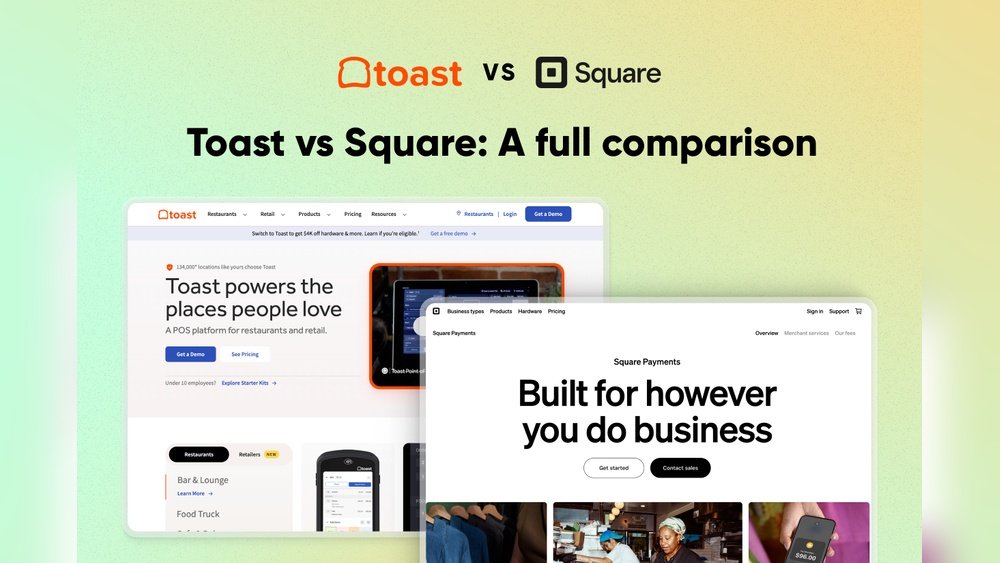
Reader-supported: some links are partner links; we may earn a commission at no cost to you. It never affects our verdict. See our disclosure.
Quick verdict: Square wins for most small and quick-service restaurants in 2026 — $0 monthly to start, transparent flat-rate processing, flexible iPad hardware, and month-to-month billing. Pick Toast if you run a busy full-service restaurant and want purpose-built, spill-resistant hardware and deeper restaurant features — just expect higher total cost and a multi-year contract.
Toast vs Square at a Glance (2026)
| Square for Restaurants | Toast | |
|---|---|---|
| Monthly software | $0 free; Plus ~$60/mo per location | $0 Starter or $69/mo+ (full setups $400–$750/mo) |
| In-person processing | 2.6% + 15¢ (2.5% + 15¢ on Plus) | 2.49% + 15¢ (paid) / 3.09% + 15¢ (free) |
| Hardware | Flexible/iPad; Terminal $299, Register $799 | Proprietary, drop/spill-tested; ~$800+ per terminal |
| Contract | Month-to-month | Often 2–3 year contract |
| Best for | Cafes, QSR, food trucks, budget-conscious | Full-service, high-volume restaurants |
Figures verified against 2026 breakdowns from NerdWallet, Sonary, and Merchant Insiders. Confirm current rates on each vendor’s site.
See Square for Restaurants See Toast
Bottom line: if price, simplicity, and flexibility matter most, start with Square. If you need restaurant-grade hardware and workflows for a high-volume, full-service venue and can commit to a contract, Toast earns its premium. Last updated June 2026 · How we review.
Choosing the right point-of-sale (POS) system can make or break your restaurant’s success. If you’re wondering whether Toast or Square is the better fit for your restaurant, you’re not alone.
Both systems promise to simplify your daily operations, but they serve very different needs. Are you running a busy, full-service restaurant that demands detailed inventory tracking and advanced reporting? Or do you own a small café or quick-service spot where affordability and ease of use matter most?
You’ll discover how Toast and Square stack up against each other. By the end, you’ll have a clear picture of which system aligns perfectly with your restaurant’s unique needs—helping you boost efficiency, reduce errors, and ultimately, increase your profits. Keep reading to find out which POS system will serve your restaurant best.

Credit: www.youtube.com
Toast Features
Toast offers a wide range of features designed specifically for restaurants. It helps manage daily tasks with ease. Each feature supports smoother operations and better customer service. The system is built to handle busy environments efficiently. Let’s explore some key features that make Toast stand out.
Integrated Management
Toast combines multiple restaurant operations into one platform. It handles orders, payments, and staff management in one place. This integration saves time and reduces errors. Managers can control everything from a single dashboard. It also supports online ordering and delivery services.
Advanced Reporting
Toast provides detailed reports on sales, labor, and customer trends. These reports help owners understand their business better. Data is easy to access and simple to read. It shows which menu items sell best and when peak hours occur. This insight helps in making smart business decisions.
Inventory Control
Toast tracks inventory levels in real time. It alerts managers when stock runs low. This feature prevents running out of key ingredients. It also reduces waste by monitoring usage closely. Inventory updates automatically as sales happen, keeping counts accurate.
Dedicated Support
Toast offers support tailored to restaurant needs. A team of experts is available to help with setup and training. They assist in solving any technical issues quickly. Support is available by phone, email, or chat. This ensures restaurants can keep running smoothly without delays.

Credit: www.upmenu.com
Square Features
Square offers a range of features designed to help restaurants manage sales and customer payments easily. Its tools focus on simplicity and efficiency. These features suit small to medium-sized restaurants that want straightforward solutions without extra complications.
User-friendly Interface
Square’s interface is clean and easy to navigate. Staff can learn the system quickly. This saves time during busy shifts. The touchscreen design allows fast order entry. Managers can access reports and settings with just a few clicks. The clear layout reduces errors and speeds up service.
Affordable Pricing
Square charges low fees for payment processing. There are no setup or monthly fees for the basic plan. This makes it affordable for new restaurants. Costs are transparent, with a flat rate per transaction. Restaurants can control expenses without surprise charges. This pricing helps keep budgets steady.
Basic Payment Processing
Square handles all major card payments smoothly. It accepts chip cards, contactless payments, and swipes. Transactions are secure and fast. The system also supports gift cards and digital wallets. This flexibility meets different customer preferences. Payments get deposited quickly into the restaurant’s bank account.
No Contract Requirement
Square does not require long-term contracts. Restaurants can start and stop using the service anytime. This freedom suits seasonal or new businesses. There are no penalties for canceling. The lack of commitment reduces risk and makes Square easy to try. It fits well with changing business needs.
Pricing Comparison
Understanding the pricing of Toast and Square helps restaurant owners choose the right system. Pricing impacts your monthly budget and overall costs. Both platforms offer different structures and fees. This section breaks down their costs clearly. You can compare base costs, additional fees, and contract terms.
Base Costs
Toast charges a monthly subscription fee starting around $69. This fee covers the core POS software. Square offers a free plan with basic features. Paid plans begin at $60 per month for more advanced tools. Hardware costs vary for both systems and are not included in the base price.
Additional Fees
Toast applies payment processing fees around 2.99% plus 15 cents per transaction. Square’s payment fees start at 2.6% plus 10 cents per swipe or tap. Both platforms may charge extra for add-ons like online ordering or payroll. Make sure to check fees for third-party integrations and support services.
Contract Terms
Toast usually requires a one to three-year contract depending on your plan. Early termination fees may apply if you cancel early. Square does not require long-term contracts. You can cancel or change plans anytime without penalties. This flexibility may suit smaller or seasonal restaurants better.
Best Fit By Restaurant Type
Choosing the right POS system depends on the type of restaurant you run. Both Toast and Square offer unique strengths tailored to different restaurant styles. Understanding which system fits your restaurant type helps improve daily operations and customer service.
Full-service Restaurants
Full-service restaurants benefit from Toast’s comprehensive features. It handles table management, split bills, and detailed reporting well. Toast supports complex menus and large teams efficiently. Its kitchen display system speeds up order processing. For busy dining rooms, Toast keeps things organized and smooth.
Small Cafes And Bars
Small cafes and bars often prefer Square for its simplicity and affordability. Square’s easy setup suits businesses with fewer staff and simpler menus. It offers quick payment options and integrates well with mobile devices. This system helps small spots serve customers fast without extra hassle.
Retail Spots
Retail spots that sell food or drinks alongside merchandise find Square useful. Its inventory tracking works well across different product types. Square also supports multiple sales channels, including online and in-store. This flexibility helps retail locations manage sales and stock easily.
Operational Impact
Operational impact plays a vital role in choosing the right POS system for restaurants. It affects daily workflows and customer satisfaction. Both Toast and Square offer features that influence restaurant operations. Understanding their effects on order accuracy, wait times, and inventory management helps make an informed choice.
Order Accuracy
Order accuracy is key to a smooth restaurant experience. Toast uses touchscreen menus and kitchen display systems to reduce errors. It sends orders directly to the kitchen, cutting down mistakes from manual entry. Square also offers order management but relies more on manual checks. This can lead to occasional errors during busy hours.
Wait Time Reduction
Shorter wait times keep customers happy and improve table turnover. Toast’s integrated system speeds up order taking and payment processes. It supports tableside ordering through tablets, speeding up service. Square provides fast checkout options but lacks deep kitchen integration. This sometimes slows down order preparation and delivery.
Inventory Management
Effective inventory management controls costs and prevents shortages. Toast offers real-time tracking of ingredients and alerts for low stock. It links sales data to inventory, helping managers reorder on time. Square includes basic inventory tools but lacks advanced features for complex menus. This may require additional software for full inventory control.

Credit: www.merchantmaverick.com
Analytics And Reporting
Analytics and reporting help restaurant owners understand their business better. Both Toast and Square offer tools to track key data. These tools show what sells well and where costs come from. Clear insights make managing a restaurant easier and smarter.
Sales Insights
Toast provides detailed sales reports that show daily and weekly trends. It breaks down sales by menu item and time of day. Square offers easy-to-read dashboards with real-time sales updates. Both systems help spot popular dishes and slow periods quickly.
Recipe Management
Toast includes recipe costing features to control food expenses. It tracks ingredient costs and suggests pricing adjustments. Square lacks built-in recipe management but allows integration with third-party apps. Knowing exact recipe costs helps keep profits steady.
Labor Cost Tracking
Toast tracks employee hours and labor costs in one place. It compares labor expenses to sales for better budget control. Square also tracks hours but offers fewer labor analysis tools. Keeping labor costs low is vital for restaurant success.
Customer Support And Training
Customer support and training play a vital role in choosing a point-of-sale system for restaurants. Both Toast and Square offer resources to help staff learn and solve problems quickly. This section compares their approaches to onboarding, account management, and technical assistance. Understanding these can help restaurant owners decide which system fits their needs best.
Onboarding Experience
Toast provides a structured onboarding process. They offer guided setup and step-by-step training materials. This helps new users get familiar with the system fast. Square focuses on simplicity with easy-to-follow tutorials and videos. Their onboarding is user-friendly, especially for small teams. Both systems aim to minimize downtime during the transition.
Account Management
Toast assigns dedicated account managers to restaurants. These managers provide personalized support and regular check-ins. This helps with tailored advice and updates. Square uses a more automated approach with online dashboards. Users can manage their accounts and access support through a self-service portal. Toast’s personal touch suits larger operations, while Square fits smaller setups.
Technical Assistance
Toast offers 24/7 technical support via phone and chat. Their team responds quickly to urgent issues. Square also provides round-the-clock help but relies heavily on online resources. Both platforms have extensive knowledge bases and community forums. Toast’s direct support is ideal for complex problems. Square’s resources work well for common questions and quick fixes.
Hardware Compatibility
Hardware compatibility plays a key role in choosing a POS system for restaurants. It affects how smoothly the system works with your current setup. Both Toast and Square offer hardware solutions, but they differ in options and integration capabilities. Understanding these differences helps restaurant owners pick the right fit.
Device Options
Toast provides a wide range of devices made for restaurant needs. It offers touchscreen terminals, handheld order pads, and kitchen display systems. All devices are built to handle busy restaurant environments. Square offers versatile hardware too, including tablets, card readers, and registers. Square’s devices work well for small to medium-sized restaurants. Toast’s hardware is often preferred for larger operations due to its specialized tools.
Integration With Existing Systems
Toast hardware integrates smoothly with its software and many restaurant tools. It supports kitchen printers, cash drawers, and digital menu boards easily. Toast is designed to replace or upgrade existing restaurant tech without much hassle. Square hardware also connects with popular third-party apps. It works well with accounting, payroll, and inventory software. This flexibility suits restaurants that already use other systems.
Frequently Asked Questions
How Does Toast Compare To Square?
Toast suits established restaurants needing advanced features like inventory and reporting but costs more. Square fits smaller cafes with simple, affordable, contract-free payment processing. Both offer restaurant tools, yet Toast integrates them better for complex operations. Choose based on budget and operational needs.
What Is The 30 30 30 Rule For Restaurants?
The 30 30 30 rule for restaurants suggests allocating 30% of revenue to food costs, 30% to labor, and 30% to overhead expenses. This guideline helps manage expenses and maintain profitability in restaurant operations.
What Pos System Is Best For Restaurants?
Toast suits established restaurants needing advanced features like inventory and reporting. Square fits smaller cafes seeking affordability and simplicity. Choose based on your restaurant size, budget, and operational complexity for the best POS system.
Is Toast Good For Restaurants?
Toast suits established restaurants with complex operations, offering robust features like inventory and advanced reporting for smoother management.
Conclusion
Choosing between Toast and Square depends on your restaurant’s size and needs. Toast fits well with busy, full-service restaurants needing detailed tools. Square works best for small cafes or new businesses wanting simple, low-cost options. Both systems help manage sales and payments effectively.
Think about your budget, features, and future growth. The right POS can improve your restaurant’s daily flow and customer experience. Take time to compare and pick what suits your business best.