
Shopify vs BigCommerce (2026): Which E-Commerce Platform Wins?

Reader-supported: some links are partner links; we may earn a commission at no extra cost to you, and it never affects our verdict. See our disclosure.

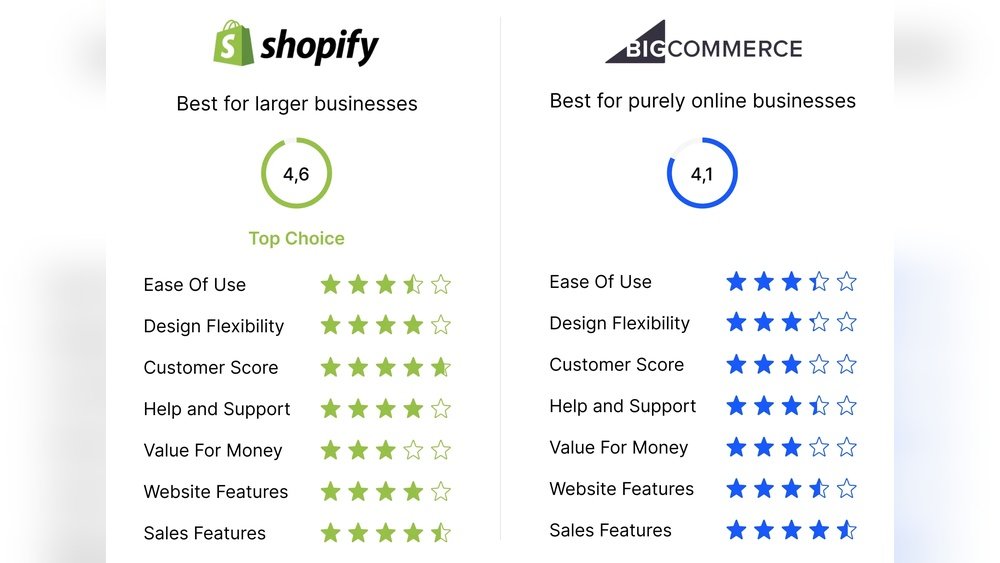
Quick verdict: Shopify (from $39/mo) wins on ease of use and the largest app ecosystem, but charges transaction fees unless you use Shopify Payments. BigCommerce ($29 Standard / $79 Plus / $299 Pro) stands out for zero transaction fees on every plan and more built-in features — great if you want fewer paid apps. Choose Shopify for ecosystem/simplicity, BigCommerce to avoid fees.

Compared at a glance (2026)

ShopifyBigCommerce
Entry price$39/mo$29/mo (Standard)
Transaction feesUnless Shopify PaymentsNone, any plan
AppsLargest ecosystem (often needed)More built-in features
Best forEase + app ecosystemNo fees + built-in features

See Shopify   See BigCommerce

Pricing verified against 2026 sources incl. Jetfuel Agency. Confirm current prices on each vendor’s site.

How we review: total real cost (subscription + apps/hosting + fees), ease of use, scalability, and real user feedback — see our methodology. Last updated June 2026.


Choosing the right eCommerce platform can make or break your online business. If you’re torn between Shopify and BigCommerce, you’re not alone.

Both platforms offer powerful tools to help you build and grow your store, but which one truly fits your needs? You’ll discover the key differences that affect your bottom line, ease of use, and growth potential. By the time you finish reading, you’ll have a clear picture of which platform will give your business the edge it deserves.

Ready to find the perfect match for your online store? Let’s dive into Shopify vs BigCommerce.

Platform Features

Choosing the right ecommerce platform depends greatly on how easy it is to use. Ease of use affects how fast you can set up your store and manage daily tasks. Both Shopify and BigCommerce offer tools designed to simplify the process. Understanding their setup process, user interface, and learning curve helps you decide which fits your needs better.

Setup Process

Shopify provides a quick and guided setup. It asks simple questions about your store and helps you add products fast. BigCommerce also offers a straightforward setup but includes more options upfront. This might take extra time for beginners. Shopify’s process feels lighter and smoother for new users.

User Interface

Shopify has a clean and modern interface. Menus and options are clear and easy to find. BigCommerce’s interface shows more features on the screen. This can feel crowded for some users. Shopify focuses on simplicity, while BigCommerce gives more control but with a busier layout.

Learning Curve

Shopify is easier to learn for beginners. The platform uses simple language and helpful tips. BigCommerce may require more time to understand all features. It suits users who want advanced tools and are ready to explore. Overall, Shopify lowers the barrier for new store owners.

Shopify Vs Bigcommerce: Ultimate Comparison for Ecommerce Success

Credit: www.malicy.com

Pricing And Fees

Sales channels play a key role in growing an online store. They help sellers reach customers across many platforms. Both Shopify and BigCommerce offer tools to connect your products to places where buyers shop. This section compares their options for sales channels. It covers multi-channel selling, social media integration, and marketplace support.

Multi-channel Selling

Shopify supports selling on websites, online stores, and physical locations. It also connects to other platforms like Amazon and eBay. BigCommerce offers similar multi-channel features. Both platforms let you manage orders and inventory from one dashboard. Shopify’s interface is simple for new users. BigCommerce provides built-in tools without many apps.

Social Media Integration

Shopify easily links with Facebook, Instagram, and Pinterest shops. You can tag products in posts and stories to boost sales. BigCommerce also connects to these social networks. Shopify offers more direct selling features on social media. BigCommerce focuses on creating a seamless shopping experience on each platform.

Marketplace Support

Shopify integrates well with major marketplaces like Amazon and eBay. It helps list products quickly and sync orders. BigCommerce supports these marketplaces too, with strong options for product listing and shipping. Both platforms simplify marketplace selling but Shopify has more add-ons for automation. BigCommerce suits sellers wanting built-in marketplace tools.

Ease Of Use

SEO and marketing are vital for any online store’s success. Both Shopify and BigCommerce offer tools to help businesses attract visitors and boost sales. Understanding their SEO features and marketing tools helps choose the right platform. Each platform supports promotions and discounts to engage customers and increase conversions.

Seo Features

Shopify provides essential SEO tools like editable title tags, meta descriptions, and URLs. It automatically generates sitemaps and supports SSL certificates. However, Shopify limits some URL structures, which may restrict advanced SEO tactics. BigCommerce offers more control over URLs and metadata. It includes built-in schema markup and strong site speed optimization. Both platforms support mobile-friendly designs, which is key for search rankings.

Marketing Tools

Shopify integrates with many marketing apps, including email marketing and social media advertising. It has a user-friendly interface for creating marketing campaigns. BigCommerce offers built-in marketing features like abandoned cart recovery and customer segmentation. It also supports multi-channel selling on platforms like Facebook and Amazon. Both platforms help store owners reach customers efficiently and grow their audience.

Discounts And Promotions

Shopify allows easy creation of discount codes, gift cards, and automatic discounts. Its app store offers additional promotion tools for special sales events. BigCommerce supports flexible coupon rules and store credit systems. It lets merchants set up BOGO deals and volume discounts. These options help attract buyers and increase average order value on both platforms.

Design And Themes

Customer support plays a vital role in choosing between Shopify and BigCommerce. Reliable help can ease the challenges of running an online store. Both platforms offer support, but their methods and speed differ. Understanding these differences can guide you to the right choice for your business needs.

Support Channels

Shopify provides 24/7 support via live chat, email, and phone. It also offers a community forum for peer help. BigCommerce supports phone, email, and live chat during business hours. Users can access a community forum and submit tickets for issues.

Response Time

Shopify’s live chat and phone support respond quickly, often within minutes. Email replies may take a few hours. BigCommerce’s response varies; live chat and phone support tend to be slower outside business hours. Email replies usually take longer than Shopify’s.

Help Resources

Shopify has an extensive knowledge base with guides, tutorials, and videos. It covers many topics for beginners and advanced users. BigCommerce also offers a detailed help center and webinars. Their resources are helpful but less extensive than Shopify’s.

Sales Channels

Security and compliance are crucial for any online store. Customers trust platforms that protect their data and transactions. Both Shopify and BigCommerce invest heavily in these areas to keep businesses safe. Understanding how each platform handles security helps you choose the right one for your store.

Data Protection

Shopify uses strong encryption to protect user and customer data. It stores information securely across multiple servers worldwide. BigCommerce also employs advanced data protection methods and regular security audits. Both platforms back up data frequently to prevent loss. This ensures your store data stays safe and private.

Payment Security

Shopify includes built-in payment security with Shopify Payments. It supports PCI DSS compliance to handle credit card data safely. BigCommerce also meets PCI DSS standards and supports many payment gateways. Both platforms use SSL certificates to encrypt payment transactions. Your customers can pay confidently, knowing their details are protected.

Compliance Standards

Shopify complies with international security standards and regulations. It follows GDPR guidelines to protect European customers. BigCommerce meets these standards as well and offers tools to help merchants comply. Both platforms update their policies to stay current with laws. This helps keep your business compliant across regions.

Shopify Vs Bigcommerce: Ultimate Comparison for Ecommerce Success

Credit: www.capitalnumbers.com

Seo And Marketing

Choosing the right e-commerce platform depends on understanding the main players in the market. Shopify and BigCommerce are popular choices, but they are not alone. Other platforms also offer strong features and appeal to different business needs. Comparing these key competitors helps you make a clear decision.

Bigcommerce Strengths

BigCommerce offers built-in features that reduce the need for apps. It supports large product catalogs and complex sales. Its SEO tools are strong, helping stores rank better in search engines. The platform also allows selling on multiple channels easily. BigCommerce has no transaction fees, which saves money on sales.

Woocommerce Comparison

WooCommerce is a free WordPress plugin that turns sites into online stores. It is highly customizable with many themes and plugins. WooCommerce works well for users familiar with WordPress. It requires more hands-on management than Shopify or BigCommerce. Hosting and security are your responsibility with WooCommerce.

Other Platforms

Platforms like Wix, Squarespace, and Magento also compete in e-commerce. Wix and Squarespace are great for small stores with simple needs. Magento suits large businesses needing advanced customization. Each platform has different pricing and features. Choose one that fits your technical skills and budget.

Shopify Vs Bigcommerce: Ultimate Comparison for Ecommerce Success

Credit: www.elegantthemes.com

Frequently Asked Questions

How Much Does Shopify Take From A $100 Sale?

Shopify charges a 2. 9% + 30¢ fee on a $100 sale using Shopify Payments. Third-party gateways add extra fees.

Should I Switch From Bigcommerce To Shopify?

Switching from BigCommerce to Shopify depends on your business needs. Shopify offers better scalability, app variety, and user-friendly design. Consider costs, features, and growth plans before deciding. Evaluate which platform aligns best with your goals and technical skills for optimal results.

Who Is The Biggest Competitor Of Shopify?

Shopify’s biggest competitor is BigCommerce, known for built-in features and scalability. WooCommerce, Wix, Squarespace, and Adobe Commerce also compete in different segments.

Is Shopify Still Relevant In 2025?

Shopify remains relevant in 2025 due to continuous updates, strong scalability, and a vast app ecosystem supporting diverse businesses.

Conclusion

Choosing between Shopify and BigCommerce depends on your store’s needs. Shopify offers ease and many apps for quick setup. BigCommerce provides built-in features and strong scalability. Both platforms support growth and can handle various business sizes. Consider costs, design options, and payment methods carefully.

Test each platform’s tools to see what fits you best. Your success depends on matching features with your goals. Take time to explore before deciding.


Related Guides

Leave a Comment